






Metabolic syndrome affects the whole body, including the liver.
Here is how they connect, and how one simple blood test can check the liver.
Metabolic syndrome is when several health problems show up in the same person: extra belly fat, high blood sugar, high blood pressure and unhealthy blood fats.
They look like separate problems, but they have the same cause: the body is no longer handling sugar and fat the way it should. Having one makes the others more likely.
US adults have metabolic syndrome, and many don’t know it.
Hirode & Wong, JAMA 2020
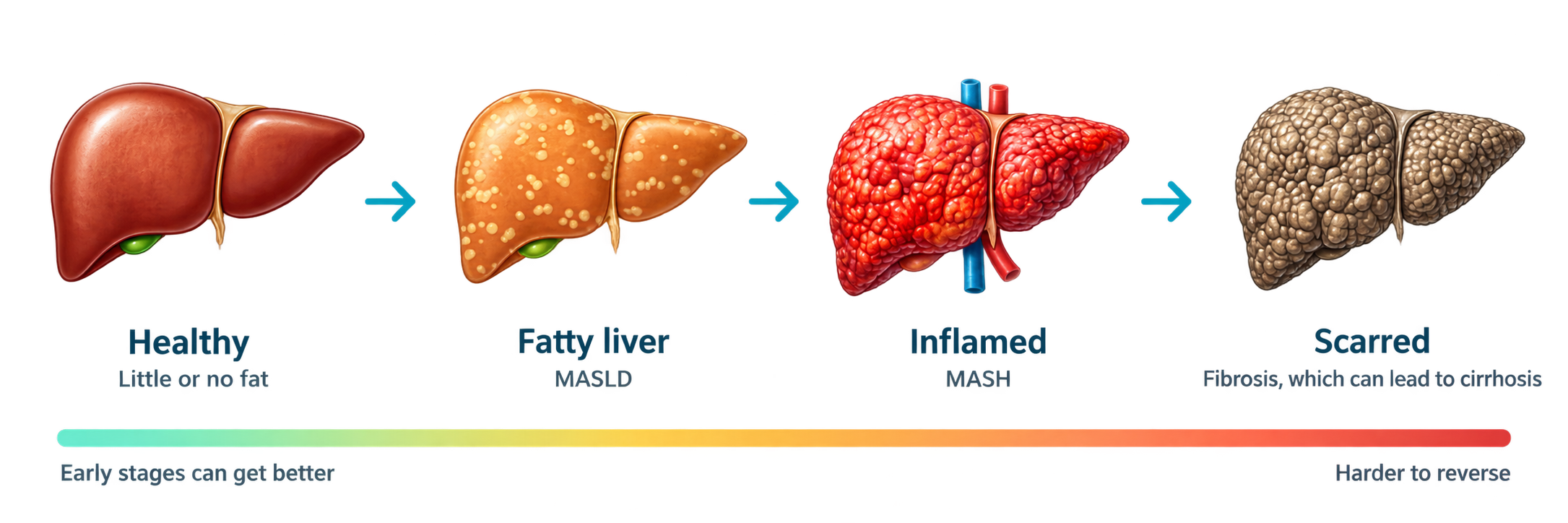
It builds up slowly over years, in four steps.
Rich food, little movement, poor sleep and stress, plus family history and age.
Extra fat is stored deep in the belly, around the organs.
The body stops responding to insulin, so sugar and fat stay in the blood.
The extra fat and inflammation reach organs that were never meant to store fat.
Where it lands: blood vessels · heart · pancreas · kidneys · liver · brain
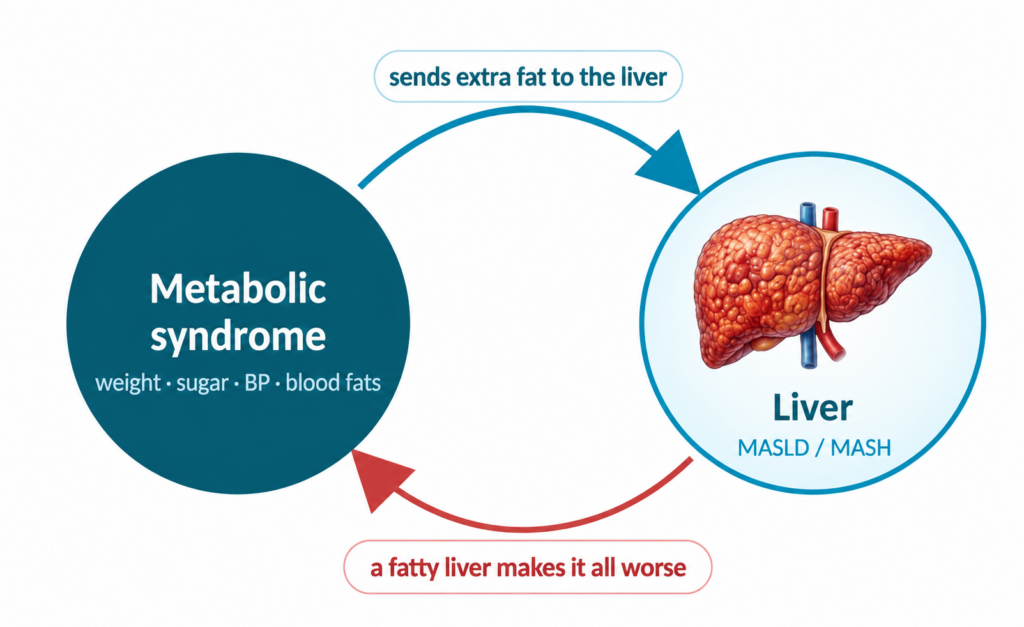
MASLD means extra fat in the liver. MASH means that fat is now hurting the liver: it is inflamed and can start to scar.
It works both ways. Metabolic syndrome pushes fat into the liver, and a fatty liver then pushes blood sugar and blood fats up, which makes everything else worse.
Most people feel fine, even with scarring.
Routine liver blood tests (ALT, AST) can look normal.
Amount of scarring drives long-term risk for liver and heart.
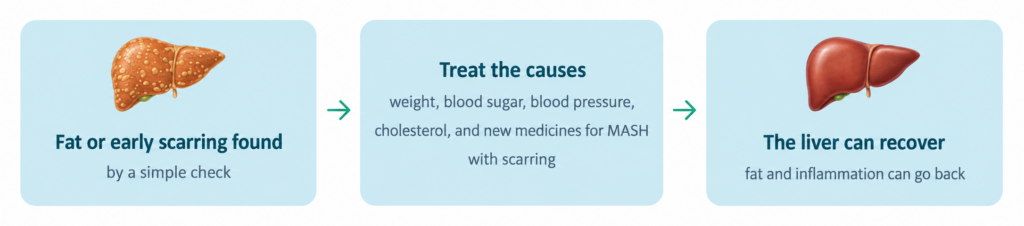
If nobody looks, MASLD and MASH can quietly turn into serious liver disease. If they are found early, there is time to act, and the liver can heal.
It affects many of the same patients already seen for diabetes, weight, blood pressure or cholesterol.
There are no symptoms until late, so it has to be looked for.
Early stages respond to lifestyle change and treatment, and newer medicines now target MASH with scarring.
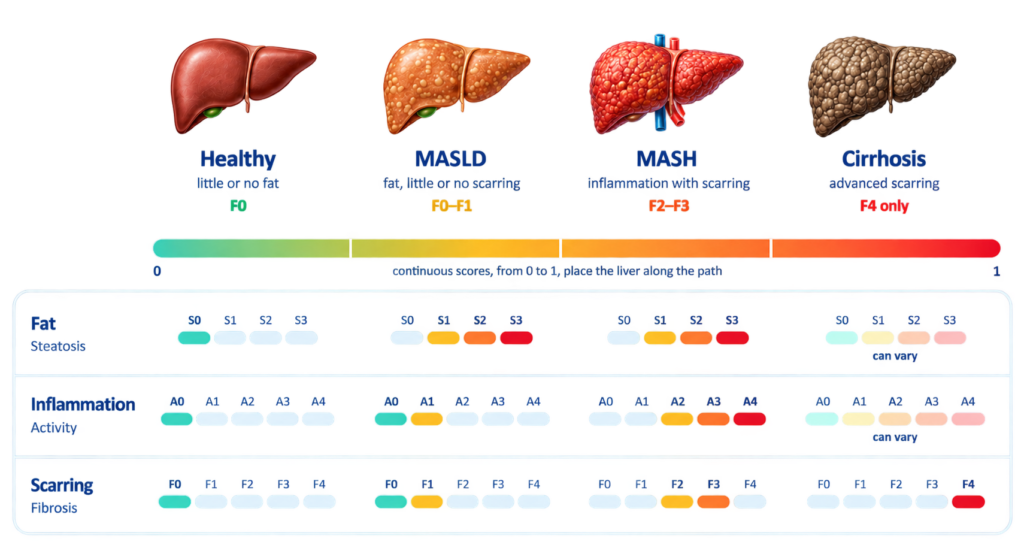
Most quick checks only estimate one thing: is there advanced scarring or not. LIVERFASt™ measures three things, fat, inflammation and scarring, each on a sliding scale. Together they show where the liver is today, from healthy to cirrhosis.
Continuous scores show early changes too, not just advanced scarring. There is no “indeterminate” result.

Shows fat and active inflammation along with scarring, so MASLD and MASH can be more clearly told apart.

Repeat the test to track changes over time and see whether the liver is gradually moving back toward a healthier state.
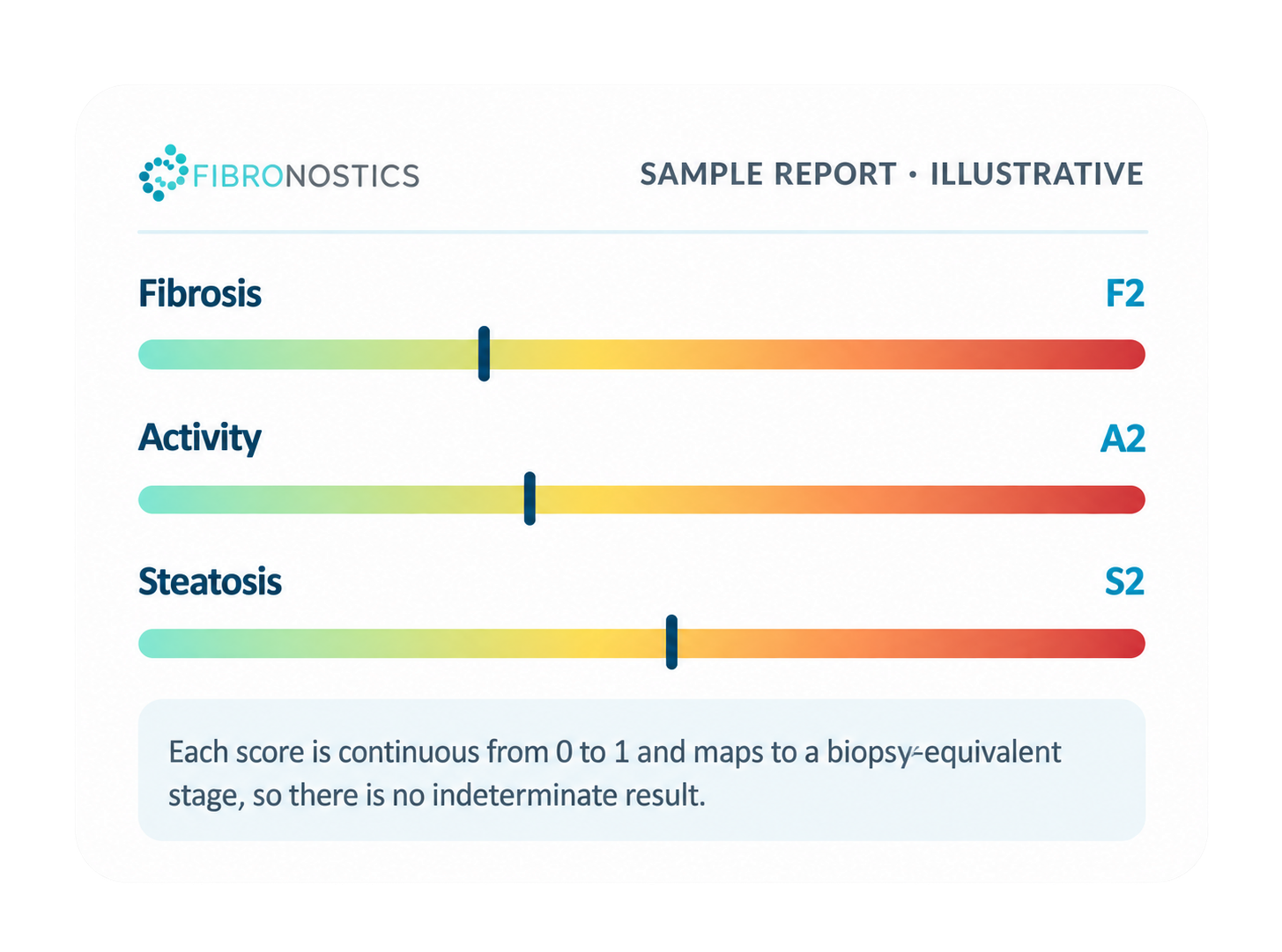
See liver scarring, inflammation and fat in one simple report.
F0–F4
Fibrosis
A0–A4
Activity
S0–S3
Steatosis
Seeing all of this used to take a liver biopsy, or a special scan at a specialist. Now it takes one blood draw, done in the same visit as the other checks.
F0–F4
Fibrosis
A0–A4
Activity
S0–S3
Steatosis
F0–F1
Stay with your family doctor. Keep working on weight, sugar, blood pressure and cholesterol.
F2
Your family doctor steps up treatment, with liver specialist input.
F3–F4
See a liver specialist.
From a simple blood draw to three clear, actionable liver scores.
A simple one-minute walkthrough of your liver test results.
Why clinicians check liver health in metabolic patients.
Blood pressure, sugar, cholesterol, kidneys, and now the liver.
This page is for general education and is not a substitute for professional medical advice. LIVERFASt is performed by Stone Clinical Laboratories, a CLIA-certified laboratory. It is not FDA approved or cleared.